

Share



Published on 09 February, 2026
| Last Updated on 10 February, 2026
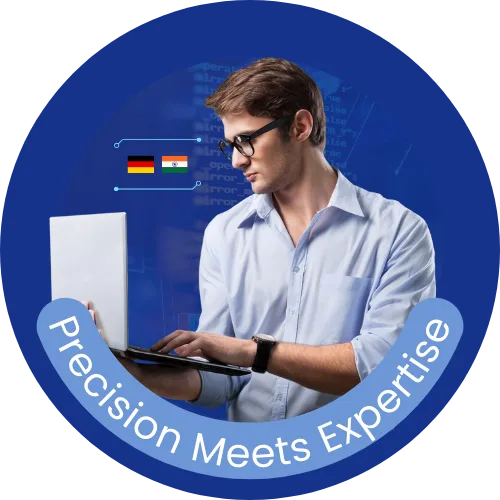
German companies are known worldwide for engineering excellence, structured processes, and long-term business thinking. In recent years, many organizations in Germany have also adopted global delivery models for software development. One of the most prominent trends is the growing number of German companies outsourcing software development services to India.
This shift is not driven by cost reduction alone. It is closely linked to talent availability, scalability, digital transformation goals, and the increasing complexity of software projects across industries such as automotive, manufacturing, logistics, finance, and healthcare.
This article explores why outsourcing software development to India has become a practical and sustainable solution for German companies and what factors influence this decision.
Germany faces a well-documented shortage of IT and software engineering professionals. Despite strong universities and technical training programs, the demand for skilled developers continues to exceed supply.
Key challenges faced by German companies include:
As digital transformation accelerates, companies require expertise in cloud platforms, enterprise systems, data engineering, artificial intelligence, and custom application development. Filling these roles locally has become increasingly difficult.
Outsourcing software development to India allows German companies to bridge this talent gap without delaying projects or compromising technical requirements.
India has one of the largest software engineering workforces globally. Developers in India work across a wide range of technologies and industries, including enterprise software, SaaS platforms, ecommerce systems, and industrial applications.
German companies benefit from access to specialists in:
This diversity makes India particularly suitable for complex and long-term software development projects. For more details, visit: https://www.rlogical.com/contact/
Cost efficiency remains an important factor, especially for German small and medium sized enterprises and technology driven startups. However, German companies typically approach outsourcing with a long-term perspective rather than short-term savings.
Outsourcing software development to India helps companies:
This approach aligns well with German business culture, which values sustainability and financial planning over rapid cost cutting.
Indian software development teams commonly follow structured delivery frameworks that resonate with German expectations around planning, documentation, and accountability.
Many teams operate with:
These practices support transparency and reduce operational risk for German companies outsourcing software development.
Nearshoring to Eastern Europe is often considered by German organizations. While nearshoring offers geographical proximity, it also presents limitations.
Eastern European countries have smaller developer populations compared to India. As demand increases, competition for talent in these regions has led to rising costs and limited scalability.
Indian outsourcing models offer greater flexibility for scaling teams up or down based on project needs. This is particularly valuable for German companies managing multiple digital initiatives simultaneously.
India provides access to a wider range of technical skills, including both modern frameworks and legacy technologies commonly used in German enterprises.
German companies outsource software development to India for various use cases, including:
Many German organizations require tailored software that aligns with specific operational workflows. Custom development allows better integration with existing systems and processes.
Manufacturing and automotive companies often outsource development related to ERP systems, production software, and data platforms to support Industry 4.0 initiatives.
German enterprises frequently rely on older systems that require modernization. Indian teams have extensive experience migrating legacy applications to modern, scalable architectures.
German startups often outsource early stage development to accelerate product launches while managing development costs effectively.
Time zone differences between Germany and India are manageable and often beneficial. Overlapping working hours enable daily communication and real-time collaboration when planned effectively.
Successful outsourcing relationships typically include:
English proficiency among Indian software professionals further supports smooth collaboration with German teams.
Data protection is a critical consideration for German companies. Outsourcing software development to India requires strict adherence to security and compliance requirements.
Key considerations include:
When these elements are addressed correctly, outsourcing to India can meet the same security standards expected in Germany.
German companies tend to value reliability, consistency, and long-term collaboration. Outsourcing relationships that succeed are usually built as partnerships rather than transactional vendor arrangements.
Best practices include:
This approach leads to improved software quality and deeper understanding of business requirements over time.
Outsourcing software development to India has become a strategic option for German companies navigating talent shortages, digital transformation, and global competition. The decision is driven by access to skilled professionals, scalable delivery models, and mature development practices rather than cost alone.
When managed correctly, outsourcing supports innovation, operational efficiency, and long-term growth for German organizations across industries.
German companies outsource software development to India mainly due to talent shortages in Germany, access to skilled engineers, scalable teams, and structured development processes that support long-term digital transformation.
Yes, outsourcing to India can be safe when proper contracts, GDPR-aligned processes, IP protection clauses, and secure development practices are in place. Many German companies successfully follow this model.
Nearshoring offers geographic proximity, but India provides a larger talent pool, better scalability, and broader technical expertise. This makes India more suitable for complex or long-term projects.
German companies commonly outsource custom software development, enterprise applications, legacy system modernization, cloud solutions, and product development to Indian teams. Companies seeking reliable offshore talent can explore dedicated hiring models here: https://www.rlogical.com/hire-dedicated-developers/
Communication is typically managed through overlapping working hours, regular video meetings, clear documentation, and structured reporting. English proficiency and defined processes support smooth collaboration.
Jatin Panchal is an innovation-driven entrepreneur, and the Founder & Managing Director of Rlogical Techsoft Pvt. Ltd. He believes modern leadership is driven by innovation, adaptability, and the transformative power of Artificial Intelligence. He focuses on helping businesses accelerate digital growth through AI-powered solutions, intelligent automation, Cloud, blockchain, IoT, and scalable enterprise technologies. With a strong strategic vision and future-focused mindset, he is passionate about building technology ecosystems that improve efficiency, drive innovation, and create long-term business value for global clients.
Global insights on technology trends, best practices, and digital transformation strategies.
A proven track record of high-impact deliveries across industries and technologies
Share with us. We'll assess its feasibility, suggest the right tech stack, and share a clear cost & timeline.
Years of Experience
Projects
Countries
Engineers
Verified Client Reviews
Industry Served