Share



Published on 24 September, 2026
| Last Updated on 24 September, 2026
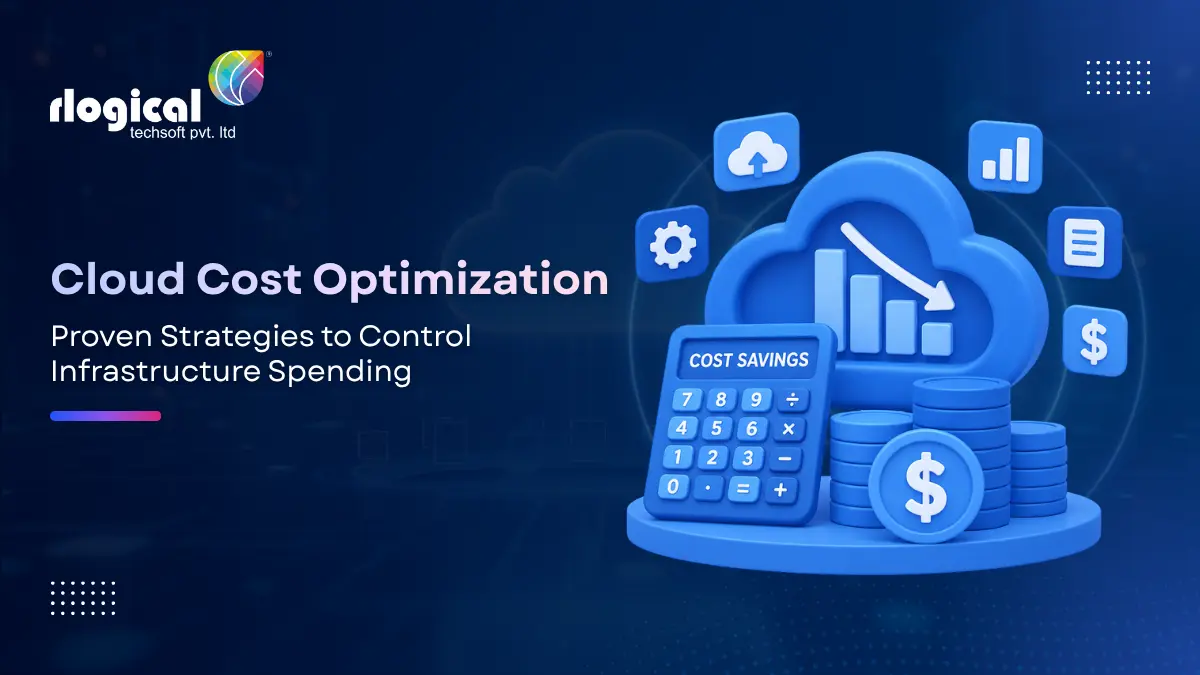
Migrating workloads to the cloud offers immense operational flexibility, rapid feature deployment, and the ability to scale infrastructure on demand. However, shifting from predictable, upfront capital expenditures (CapEx) to dynamic, consumption-based operational expenditures (OpEx) introduces a distinct financial challenge. Without strict governance and continuous oversight, cloud infrastructure spending can easily drift out of alignment with actual business value.
Cloud cost optimization is not a one-time exercise aimed at slashing engineering budgets during financial downturns. Rather, it is a continuous operational discipline designed to maintain maximum efficiency, performance, and reliability while eliminating financial waste. Managing cloud spending effectively requires aligning system architectures, deployment workflows, and engineering practices with clear fiscal metrics.
Understanding why infrastructure bills escalate, identifying key areas of waste, and establishing structured optimization frameworks allows organizations to regain financial predictability while building modern, resilient applications.
For organizations looking to build a scalable cloud infrastructure, cloud service expertise can also help align architecture, resource usage, and operational requirements.
https://www.rlogical.com/cloud-service-company/
Cloud cost optimization is the systematic practice of aligning cloud infrastructure configurations and monthly expenditures with genuine application requirements and business objectives. It involves continuously analyzing utilization metrics, rightsizing provisions, selecting optimal pricing structures, and eliminating non-essential resources.
It is critical to distinguish between blind cost cutting and true infrastructure optimization:
The ultimate objective of optimization is maximizing value per dollar spent. Operating a lean, properly architected cloud environment ensures that every provisioned resource directly contributes to operational capability or end-user performance.
In traditional on-premises data centers, capacity planning is constrained by physical procurement cycles. Provisioning a new server requires budget approval, hardware orders, delivery, and manual racking. In contrast, cloud environments offer instant, programmatic access to vast compute capacity through simple API calls or infrastructure-as-code scripts.
While this speed fuels product delivery, it also removes traditional spend gatekeepers. Several common operational factors contribute to inflated cloud invoices:
Engineering teams frequently select compute, memory, and database configurations based on worst-case traffic spikes or conservative initial estimates. When these provisions remain static during low-traffic periods, organizations pay for substantial capacity that sits completely idle.
Dynamic cloud operations frequently leave behind detached storage volumes, unattached static IP addresses, stale database snapshots, and legacy machine images. While an individual unattached disk might seem inexpensive, hundreds of orphaned assets accumulating over months across multiple environments create significant recurring waste.
Cloud providers generally do not charge for incoming network traffic, but outbound data movement (egress) and traffic crossing availability zone or regional boundaries incur distinct per-gigabyte costs. Architectures that unnecessarily route heavy traffic between separate zones or across regional backbones quickly accrue substantial network charges.
Development, testing, staging, and demonstration environments rarely require 24/7 availability. Leaving non-production clusters, sandbox databases, and worker nodes running over weekends and outside normal working hours results in hundreds of hours of unneeded compute charges every month.
While autoscaling matches compute capacity with incoming traffic, misconfigured scaling policies can launch excessive instances in response to temporary metric spikes or background jobs. Without explicit upper limits, conservative cooldown periods, or appropriate scaling metrics, automated rules can drastically inflate costs within hours.
Software decisions directly influence infrastructure spending. Legacy applications migrated straight to virtual machines without refactoring (a standard “lift-and-shift”) often fail to take advantage of managed services, auto-pause features, or serverless execution models, leading to inherently inefficient resource consumption.
Controlling cloud infrastructure spend requires an actionable, multi-layered strategy that addresses compute, storage, networking, and purchasing models.
Rightsizing is the process of matching resource allocations—such as CPU, RAM, disk I/O, and throughput—to actual performance requirements.
Optimization decisions must rely on operational telemetry rather than assumptions. Review utilization data over a representative window (typically 30 to 90 days) to identify instances running consistently at low CPU utilization (e.g., under 10–15%) or memory usage. Downgrade these resources to smaller instance families, or transition workloads to modern hardware architectures (such as ARM-based processors) that often yield better performance-to-cost ratios.
Caution: Avoid aggressive rightsizing on workloads subject to sudden, unpredictable traffic spikes without verifying that autoscaling policies can respond rapidly enough to prevent service degradation.
For businesses working with Microsoft-based cloud environments, dedicated Azure consulting can also support infrastructure planning, optimization, migration, and ongoing cloud management.
https://www.rlogical.com/azure-consulting-services/
Systematically auditing infrastructure environments helps identify and eliminate non-essential assets. Build automated cleanup workflows to address:
Non-production workloads (development, QA, staging) rarely need to run continuously. A standard 40-hour work week accounts for less than 25% of the total hours in a week.
Implementing automated start/stop scripts or scheduled orchestration tasks that shut down non-production instances every evening and throughout weekends immediately reduces runtime charges for those assets by up to 70%.
Major cloud platforms offer several purchasing tiers beyond standard, variable on-demand rates:
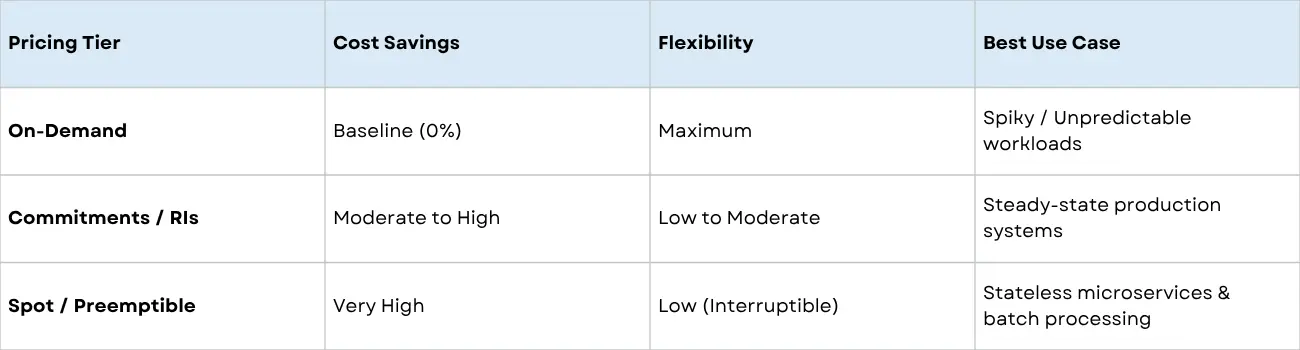
A well-architected cloud strategy balances these tiers: use committed pricing models for steady baseline production workloads, leverage spot instances for fault-tolerant batch processing or stateless container nodes, and reserve on-demand capacity for unexpected scaling bursts.
AWS cloud services can further support organizations in designing scalable infrastructure, optimizing workloads, and managing cloud environments according to changing business requirements. https://www.rlogical.com/aws-cloud-services/
Storage costs compound as application data grows. Cloud providers offer distinct storage tiers based on access frequency, ranging from high-performance block storage to cold archival storage.
Define automated object storage lifecycle policies that automatically transition data across tiers over time:
Inter-region, inter-zone, and internet-directed network traffic often forms a surprisingly large portion of cloud bills. Optimize network architecture through targeted steps:
Without clear metadata, identifying who owns specific resources—and why they were provisioned—becomes nearly impossible as environments scale.
Establish a mandatory resource-tagging policy across all infrastructure deployments. Tags should capture crucial operational context:
Enforce tagging rules automatically using policy engines (such as AWS Organizations Service Control Policies, Azure Policy, or Terraform compliance scripts) that block or report untagged resource creation.
Cost management requires clear operational visibility. Organizations cannot address hidden cost drivers without accurate tracking tools and detailed metric displays.
Effective cloud cost monitoring relies on four foundational components:
Cloud financial management is not exclusively an IT or accounting responsibility; it requires operational alignment across departments. FinOps (Cloud Financial Operations) is a cultural framework that combines financial accountability with engineering speed.
FinOps operates through a continuous, three-phase framework:
By making cost efficiency an engineering metric alongside uptime, security, and response latency, organizations encourage software architects to design cost-aware systems from day one.
The primary cloud service providers offer native monitoring, reporting, governance, and optimization tools tailored to their platforms:
Organizations using Google Cloud can also leverage specialized Google Cloud services for infrastructure planning, migration, application modernization, and cloud optimization. https://www.rlogical.com/google-cloud-services/
While these native features provide valuable actionable intelligence, relying solely on provider tools without internal governance policies can leave organizational gaps—particularly for enterprises operating complex multi-cloud hybrid setups.
Even well-intentioned optimization initiatives can yield poor results if executed without careful analysis. Avoid these frequent missteps:
Treating cost management as an occasional, one-off cleanup leads to predictable cycles where costs drop briefly after an audit, then steadily rise as new applications ship. Cost management must be built into continuous operations.
Reducing compute instances or database tiers without analyzing application memory limits, peak traffic windows, or latency requirements risks causing system outages, slow response times, and degraded user experiences.
Engineering efforts often focus exclusively on compute instances while ignoring accumulating snapshots, unattached block storage, and unarchived application logs. Over time, neglected storage assets can become a major driver of monthly cloud expenses.
Purchasing multi-year reservations or spending commitments without evaluating upcoming system migrations, application refactoring plans, or product shifts risks locking organizations into rigid instance families they may outgrow before contracts expire.
Focusing solely on server and database sizes while ignoring cross-zone data movement, API egress, and external file transfers frequently leaves teams surprised by large network charges.
To build an efficient cloud spending model, follow a structured operational process:
Enforce resource tagging policies and establish centralized cost dashboards to track expenditure alongside technical performance metrics.
Identify and terminate unattached storage volumes, unassociated IP addresses, obsolete snapshots, and inactive testing environments.
Analyze CPU, memory, and disk telemetry over a 30-to-90-day window to downsize overprovisioned compute and database instances.
Configure automated storage lifecycle policies for data archiving and optimize service routing to minimize cross-zone data egress charges.
Transition steady-state baseline production workloads to committed use plans or reserved instances to secure lower hourly rates.
Establish proactive budget threshold alerts and build cost-awareness into continuous integration pipelines and architectural design reviews.
Cloud cost optimization is not about restricting engineering teams or compromising application reliability; it is about establishing operational discipline and aligning technical deployments with business value. Eliminating unnecessary waste, choosing appropriate pricing tiers, and establishing continuous visibility enables businesses to maintain agile software delivery while keeping infrastructure spending predictable.
Managing complex cloud architectures across expanding product lines requires a thoughtful balance of software design expertise, system monitoring, and operational governance. Organizations navigating multi-cloud deployments, legacy system modernizations, or complex cloud refactoring often benefit from partnering with experienced cloud engineering specialists to build cost-efficient, scalable, and resilient systems.
Cloud cost optimization is the ongoing process of managing cloud resources to eliminate waste, adjust provisions to actual workload demands, and leverage efficient pricing models. Its goal is to reduce overall cloud spending without negatively impacting application performance, security, or reliability.
Cloud invoices typically escalate due to unmanaged resource overprovisioning, idle development environments left running indefinitely, orphaned storage volumes, cross-zone data transfer charges, misconfigured autoscaling thresholds, and a lack of ownership tagging across deployment environments.
Rightsizing is the practice of analyzing performance telemetry—such as CPU utilization, memory pressure, and network throughput—to adjust cloud compute and database assets to the most efficient size and class required to handle actual application demand safely.
FinOps fosters cross-functional collaboration between finance, engineering, and product management teams. By introducing real-time spending visibility, shared metrics, and decentralized financial accountability, FinOps ensures that cost efficiency becomes a continuous engineering consideration alongside performance and uptime.
If executed blindly without analyzing utilization metrics or traffic patterns, resource downsizing can cause system bottlenecks or service interruptions. However, proper optimization relies on usage telemetry to preserve performance capacity, system availability, and redundancy while eliminating clear waste.
Organizations should monitor basic metrics and budget alerts daily, audit non-production environments and idle assets weekly, and conduct formal resource allocation and commitment reviews monthly. Continuous automated monitoring is essential for preventing budget drift in dynamic cloud environments.
Jatin Panchal is an innovation-driven entrepreneur, and the Founder & Managing Director of Rlogical Techsoft Pvt. Ltd. He believes modern leadership is driven by innovation, adaptability, and the transformative power of Artificial Intelligence. He focuses on helping businesses accelerate digital growth through AI-powered solutions, intelligent automation, Cloud, blockchain, IoT, and scalable enterprise technologies. With a strong strategic vision and future-focused mindset, he is passionate about building technology ecosystems that improve efficiency, drive innovation, and create long-term business value for global clients.
Global insights on technology trends, best practices, and digital transformation strategies.
A proven track record of high-impact deliveries across industries and technologies
Share with us. We'll assess its feasibility, suggest the right tech stack, and share a clear cost & timeline.
Years of Experience
Projects
Countries
Engineers
Verified Client Reviews
Industry Served