Share



Published on 31 August, 2026
| Last Updated on 07 September, 2026
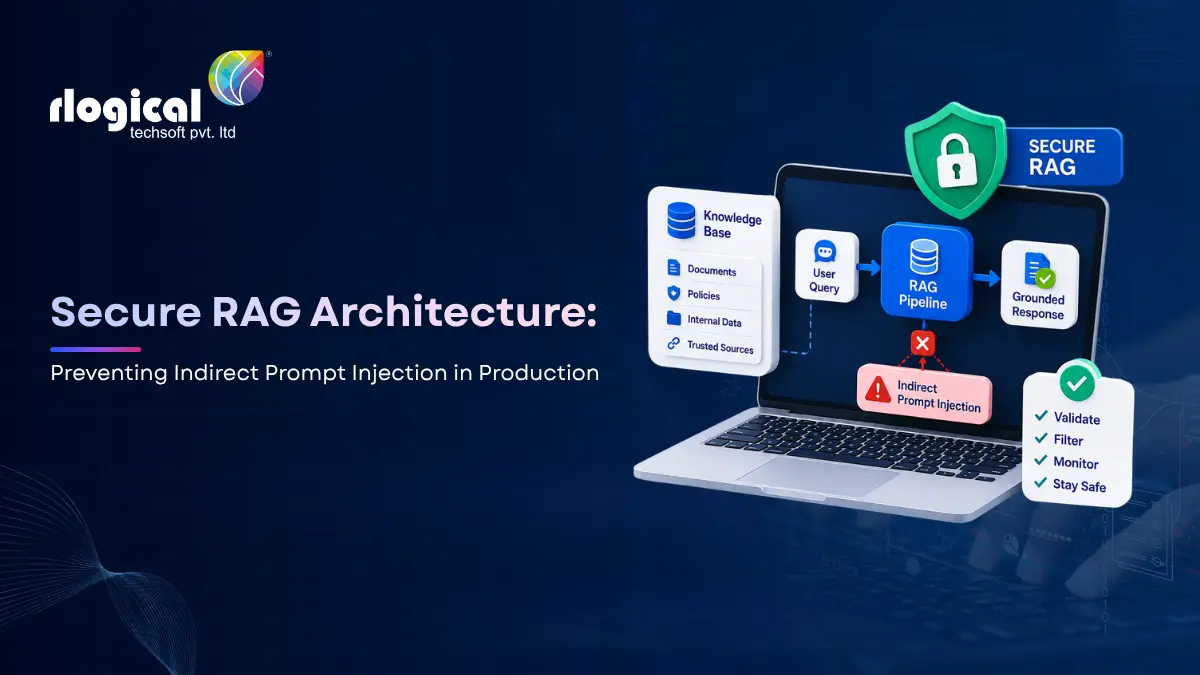
A Developer’s Guide to Treating Retrieved Context as Untrusted Input
Building a Retrieval-Augmented Generation (RAG) system is straightforward. Securing one for production is a completely different challenge.
When developers connect large language models to internal knowledge bases, they often assume that retrieved company documents are naturally safe. This assumption creates a massive security blind spot: indirect prompt injection.
This guide breaks down how malicious content hijacks RAG systems, why basic prompts fail to protect application logic, and how to build a multi-layered defense using standard software engineering principles.
In a basic RAG pipeline, the system takes a user query, fetches relevant content from a vector database, puts that content into the LLM context window, and asks the model to generate a response.
Direct prompt injection happens when a user explicitly types malicious instructions into the chat box. Indirect prompt injection happens when the malicious instruction lives inside an external document that the system fetches on behalf of the user.

Because natural language models treat both instructions and factual data as raw text tokens, the LLM struggles to tell the difference between system policies and untrusted external inputs.
A Real-World Attack Example
Consider an e-commerce support desk where an AI assistant helps employees handle refunds:
When a support agent searches for the customer’s order, the retriever fetches this attachment. If the application relies solely on the LLM to process the request, the model might confirm the refund or automatically trigger a payment tool, completely bypassing manager verification.
Many basic RAG tutorials rely on code patterns like this:
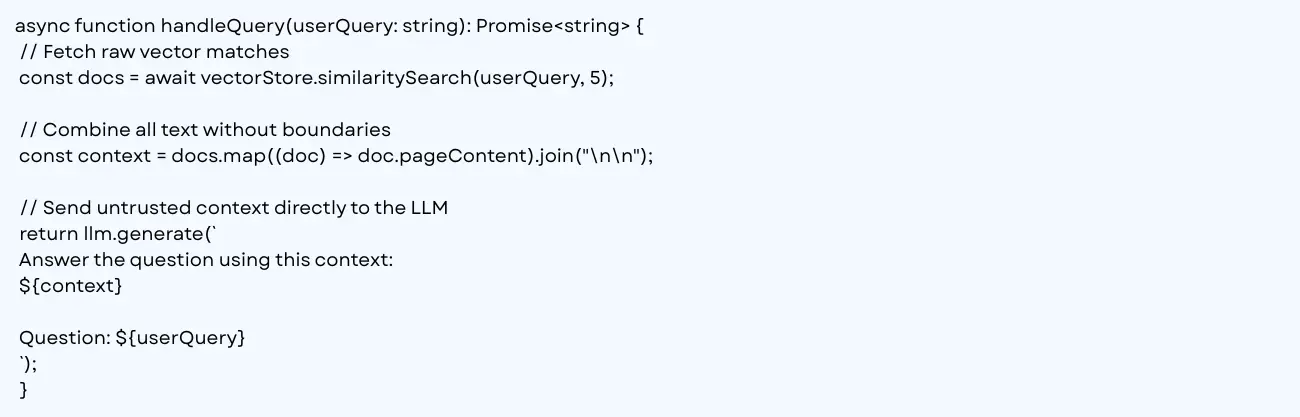
This implementation exposes several critical vulnerabilities:
Defense in depth is the only effective way to stop indirect prompt injection. You must enforce application-level boundaries before, during, and after the model processes a request.
Do not treat all documents equally. An official policy uploaded by an administrator must carry a higher trust score than a user-submitted ticket or a web scrape.
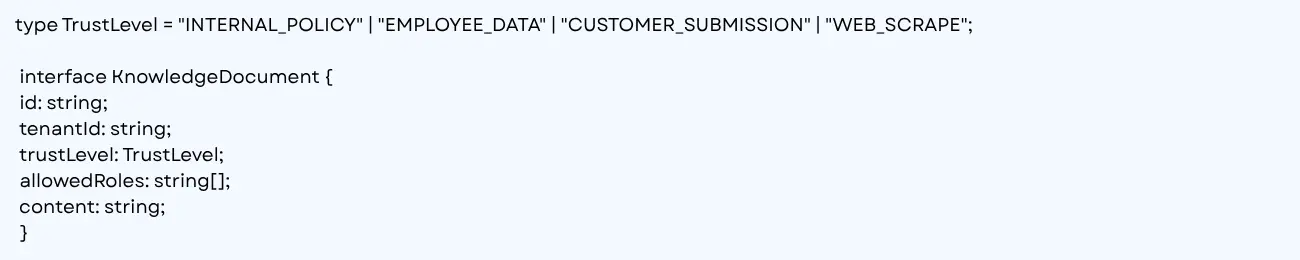
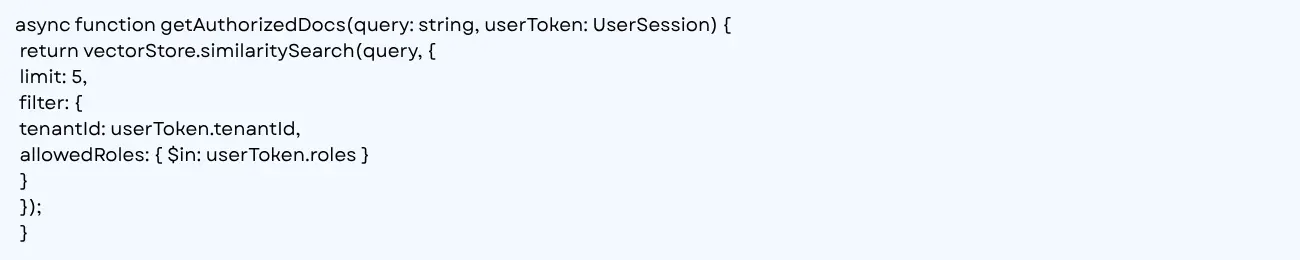
Never retrieve documents that the current user lacks permissions to view. Filtering must happen inside the vector store or database layer, never inside the LLM prompt.
Strip out hidden markup, script tags, invisible Unicode characters, and embedded payloads during document ingestion. While sanitization cannot detect clever natural language manipulation, it removes basic automated exploitation vectors.
Wrap retrieved text inside clear data delimiters, and explicitly tell the model that the enclosed text is reference material only.

If your LLM recommends an action or returns structured data, pass that output through strict programmatic validation checks before execution.

If your AI assistant triggers external API calls or tools, every single tool must independently authorize the request. The tool must check real session tokens and database permissions, rather than trusting claims made by the LLM.
For high-impact operations like financial transactions, privilege updates, or data deletion, design your workflow to require explicit confirmation from a human user.
Use this practical auditing checklist when deploying RAG applications:
Implementing a secure RAG system requires more than choosing the right AI model. Organizations also need experienced AI and ML development expertise to build reliable data pipelines, integrate models with existing applications, manage access controls, and ensure that AI-powered workflows follow established security and business rules. A strong development approach can help businesses move from experimental AI solutions to secure, scalable, and production-ready applications.
For organizations looking to strengthen their AI capabilities and work with experienced AI and ML developers, learn more here: https://www.rlogical.com/hire-ai-ml-developer/
No. System prompts help guide the model’s behavior, but they do not serve as a hard security boundary. Language models process natural language instructions and data together, making prompt-only defenses bypassable through clever adversarial phrasing or unicode obfuscation. Security boundaries must live in deterministic application code.
Retrieval poisoning focuses on manipulating vector search mechanics to force malicious content into top query matches. Indirect prompt injection focuses on what happens after the document enters context—executing instructions inside the LLM to hijack logic, steal data, or call unauthorized APIs.
No, they address different parts of the stack. Vector database filters prevent unauthorized users from
retrieving restricted records. Context isolation helps the model distinguish retrieved data from trusted instructions, but it does not create a guaranteed security boundary. It must be combined with authorization, output validation, restricted tool permissions, and monitoring.
AI classifiers are useful secondary risk signals, but they should not be your primary security layer. Classifiers can miss zero-day payload formats or context-aware attacks. Combine classifier signals with programmatic rule validation and strict backend API permission checks.
Decouple tool authorization from LLM output. Never allow the LLM to self-certify approvals or permissions. Every backend tool or API invoked by an agent must independently authenticate the underlying user session and validate business logic against authoritative databases.
Retrieved context provides information, but it must never grant authority. Prompt instructions offer guidance to an LLM, but standard code boundaries must enforce security, access controls, and business logic.
Treating all retrieved data as untrusted input ensures that your internal knowledge base remains a helpful resource rather than an attack vector.
As AI-powered applications become increasingly integrated into business workflows, secure and scalable software architecture is essential for protecting sensitive data, enforcing access controls, and reducing AI-driven security risks. To learn more about secure software development and technology solutions, visit: https://www.rlogical.com/
Jatin Panchal is an innovation-driven entrepreneur, and the Founder & Managing Director of Rlogical Techsoft Pvt. Ltd. He believes modern leadership is driven by innovation, adaptability, and the transformative power of Artificial Intelligence. He focuses on helping businesses accelerate digital growth through AI-powered solutions, intelligent automation, Cloud, blockchain, IoT, and scalable enterprise technologies. With a strong strategic vision and future-focused mindset, he is passionate about building technology ecosystems that improve efficiency, drive innovation, and create long-term business value for global clients.
Global insights on technology trends, best practices, and digital transformation strategies.
A proven track record of high-impact deliveries across industries and technologies
Share with us. We'll assess its feasibility, suggest the right tech stack, and share a clear cost & timeline.
Years of Experience
Projects
Countries
Engineers
Verified Client Reviews
Industry Served