

Share




Published on 16 March, 2026
| Last Updated on 18 May, 2026
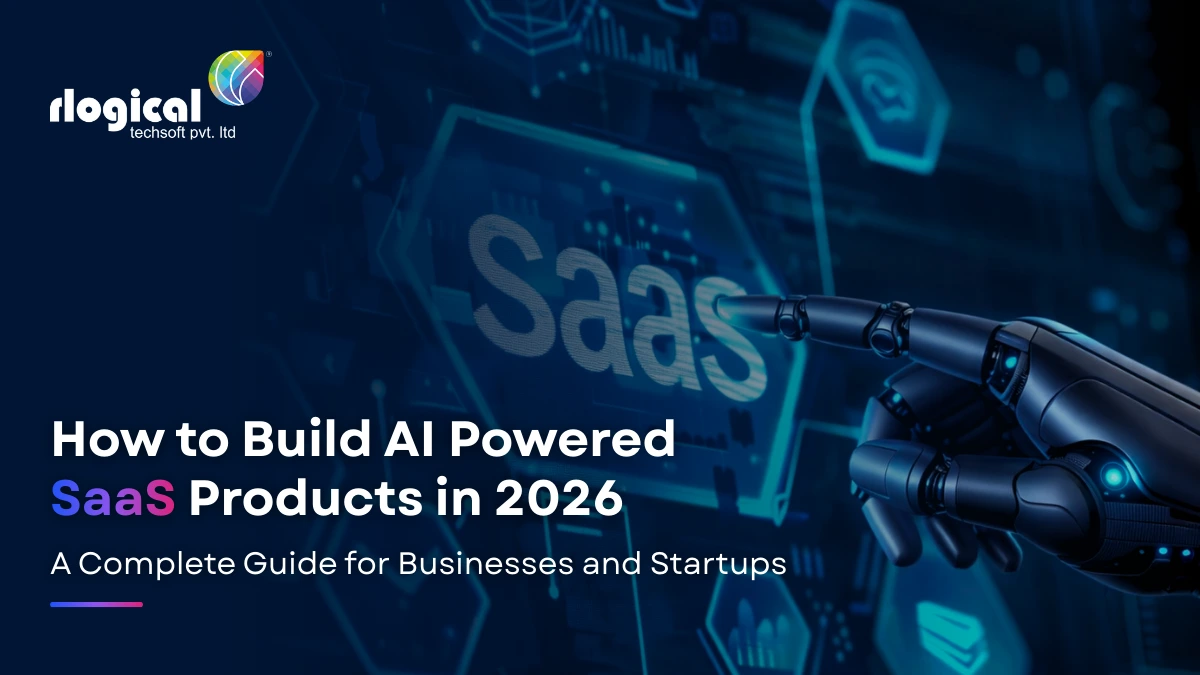
Artificial intelligence continues to reshape the software industry, and one of the most exciting developments is the rise of AI powered SaaS products. Software as a Service platforms have long provided businesses with scalable and accessible digital tools, but the integration of artificial intelligence has taken these solutions to an entirely new level.
In 2026, businesses are increasingly adopting AI powered SaaS applications to automate tasks, analyze large volumes of data, personalize user experiences, and improve operational efficiency. From intelligent analytics platforms to AI driven customer service tools, these solutions are transforming how organizations operate.
For startups and technology companies, building an AI powered SaaS product presents a tremendous opportunity to enter high growth markets and deliver innovative solutions. To learn more about how expert teams approach this, you can visit https://www.rlogical.com/ . This guide explores how to build AI powered SaaS products in 2026, including the technologies involved, development strategies, and best practices for creating scalable and successful platforms.
AI powered SaaS products combine the scalability of cloud based software with the intelligence of artificial intelligence technologies. These platforms use machine learning, natural language processing, predictive analytics, and automation to deliver smarter digital solutions.
Traditional SaaS products provide functionality through cloud hosted applications that users access through web browsers or mobile apps. AI powered SaaS platforms go further by enabling software to learn from data, generate insights, and automate complex tasks.
Examples of AI powered SaaS products include intelligent marketing platforms, AI customer support systems, automated financial analysis tools, and predictive business analytics platforms. These applications help organizations make better decisions, reduce manual work, and improve productivity.
The demand for AI powered SaaS solutions has increased significantly in recent years. Several factors are driving this rapid growth.
Businesses are constantly looking for ways to reduce manual processes and improve efficiency. AI powered SaaS platforms automate repetitive tasks such as data analysis, report generation, and customer support.
Organizations generate massive amounts of data every day. AI tools help analyze this information quickly and provide valuable insights that support strategic decision making.
Modern cloud platforms allow developers to build scalable SaaS products capable of serving thousands or even millions of users. This scalability makes it easier for companies to launch AI driven services globally.
AI powered SaaS applications can deliver personalized recommendations, predictive insights, and intelligent assistance that improve user engagement and satisfaction.
The availability of powerful AI models and APIs has made it easier for developers to integrate artificial intelligence into SaaS platforms without building complex systems from scratch.
Building a successful AI SaaS product requires several essential components that work together to deliver intelligent functionality.
At the core of an AI SaaS platform are the AI models responsible for processing data and generating results. These models can perform tasks such as natural language processing, image recognition, predictive analytics, and automated decision making. For businesses that need professional support in building these models, https://www.rlogical.com/ai-ml-development-services/ end-to-end AI and ML development solutions.
Cloud infrastructure provides the foundation for SaaS platforms. Cloud environments enable scalable computing resources, storage, and network capabilities necessary for running AI applications.
AI systems rely heavily on data. A robust data management strategy ensures that data is collected, processed, and stored efficiently while maintaining security and compliance.
APIs allow SaaS platforms to connect with external services and integrate with other business systems. APIs are essential for enabling features such as payment processing, CRM integration, and third party analytics.
The success of a SaaS product depends heavily on user experience. A well designed interface ensures that users can easily access AI features and interact with the platform effectively.
Developing an AI SaaS platform requires a structured approach that combines business strategy, software engineering, and artificial intelligence expertise.
The first step in building an AI SaaS product is identifying a real business problem that can be solved using artificial intelligence. Successful products focus on addressing specific pain points for target users.
Market research helps determine whether there is demand for the solution and identifies potential competitors.
Once the problem is identified, businesses should define the core features of the SaaS platform. These features should align with the product’s value proposition and deliver meaningful benefits to users.
For example, an AI marketing platform may include features such as campaign analysis, predictive customer insights, and automated content recommendations.
Selecting the appropriate technology stack is essential for building scalable AI SaaS platforms. This includes choosing programming languages, frameworks, AI tools, and cloud infrastructure.
Popular choices often include modern JavaScript frameworks for frontend development, scalable backend systems, and cloud based AI services.
A minimum viable product allows businesses to launch a basic version of the SaaS platform with essential features. This approach enables companies to test the product in the market, gather user feedback, and refine the platform before full scale development.
AI functionality requires training models with relevant data. Developers must ensure that models are trained with high quality datasets to achieve accurate and reliable results.
Continuous improvement and retraining help maintain performance as the platform grows.
Scalability is critical for SaaS platforms. The architecture should support increasing user demand without affecting performance. Microservices architecture and cloud infrastructure can help achieve this scalability.
Security is a major concern for SaaS platforms, especially when dealing with sensitive user data. Implementing strong encryption, secure authentication, and compliance with data protection regulations is essential.

Before launching the product, thorough testing should be conducted to identify bugs, performance issues, and usability challenges. Continuous monitoring after launch helps maintain platform stability.
To remain competitive in the SaaS market, AI powered platforms must provide features that deliver real value to users.
Automation reduces manual tasks and improves efficiency. AI SaaS products should automate workflows, data processing, and routine business operations.
AI driven analytics provide users with insights derived from complex data analysis. These insights help organizations make informed decisions.
Personalized experiences improve user engagement. AI can analyze user behavior and tailor recommendations, notifications, and content accordingly.
Businesses rely on multiple software systems. AI SaaS platforms should support integrations with existing tools such as CRM systems, marketing platforms, and productivity applications.
Real time data processing allows users to receive immediate insights and responses, enhancing the value of the platform.
Although AI SaaS platforms offer tremendous opportunities, they also present several development challenges.
AI models require high quality datasets for training. Inaccurate or insufficient data can lead to unreliable results.
Running AI models can require significant computing resources. Businesses must manage infrastructure costs while maintaining performance.
Developing and maintaining AI models requires specialized expertise in machine learning and data science. Rather than building an in-house team from scratch, many businesses prefer to work with dedicated professionals. You can explore available talent at https://www.rlogical.com/hire-ai-ml-developer/ to find experienced AI and ML developers who can deliver results from day one.
AI systems must be designed responsibly to avoid bias and ensure fair decision making.
The future of AI SaaS products will be shaped by continuous advancements in artificial intelligence and cloud computing.
Several emerging trends are expected to influence SaaS development in the coming years.
AI assistants will become more capable of performing complex business tasks autonomously.
Multimodal AI systems will allow SaaS platforms to process text, images, and voice inputs simultaneously.
Edge computing will enable faster processing and improved performance for AI applications.
Low code and no code AI tools will make it easier for businesses to build intelligent applications without extensive programming expertise.
These innovations will expand the possibilities for AI SaaS platforms and create new opportunities for businesses.
AI powered SaaS products are redefining how businesses deliver digital services. By combining cloud based software with advanced artificial intelligence capabilities, these platforms enable organizations to automate processes, analyze data, and provide intelligent solutions to users.
Building a successful AI SaaS product requires careful planning, strong technical foundations, and a deep understanding of user needs. Businesses must focus on solving real problems, implementing scalable architectures, and continuously improving their AI models.
As artificial intelligence continues to evolve, AI powered SaaS platforms will become an essential part of modern business ecosystems. Companies that invest in developing intelligent SaaS solutions today will be well positioned to lead innovation and capture new opportunities in the digital economy of 2026 and beyond.
Jatin Panchal is an innovation-driven entrepreneur, and the Founder & Managing Director of Rlogical Techsoft Pvt. Ltd. He believes modern leadership is driven by innovation, adaptability, and the transformative power of Artificial Intelligence. He focuses on helping businesses accelerate digital growth through AI-powered solutions, intelligent automation, Cloud, blockchain, IoT, and scalable enterprise technologies. With a strong strategic vision and future-focused mindset, he is passionate about building technology ecosystems that improve efficiency, drive innovation, and create long-term business value for global clients.
Global insights on technology trends, best practices, and digital transformation strategies.
A proven track record of high-impact deliveries across industries and technologies
Share with us. We'll assess its feasibility, suggest the right tech stack, and share a clear cost & timeline.
Years of Experience
Projects
Countries
Engineers
Verified Client Reviews
Industry Served