Share




Published on 16 March, 2026
| Last Updated on 21 July, 2026
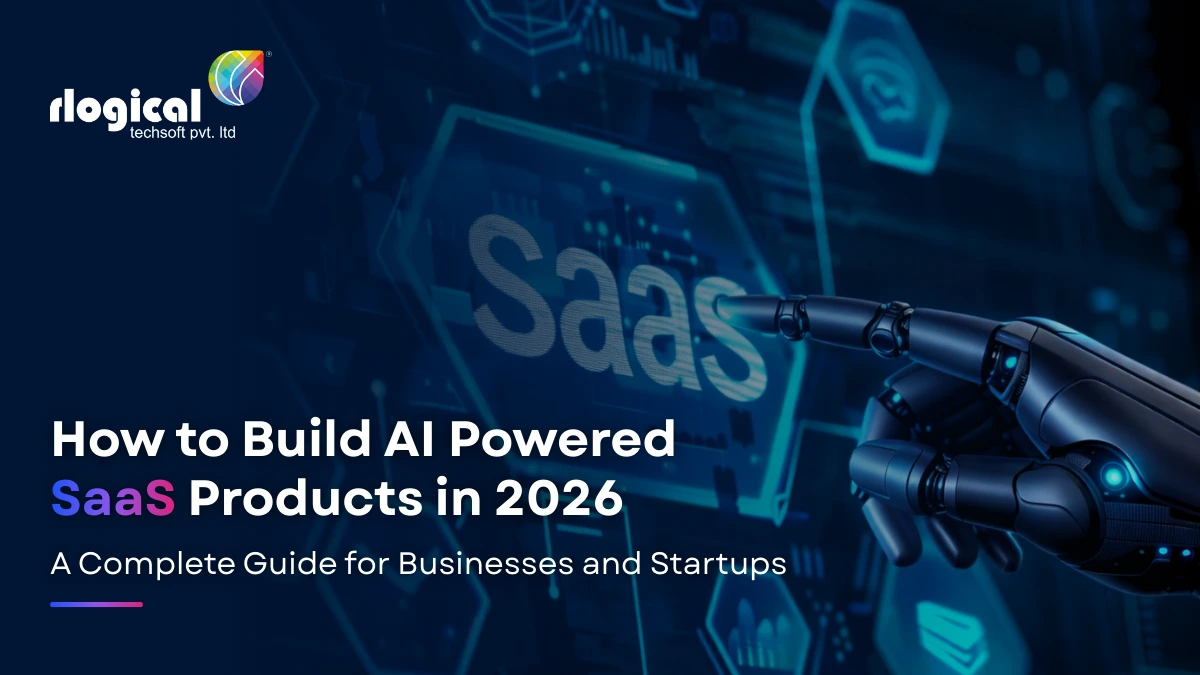
Artificial intelligence continues to reshape the software industry, and the rise of AI powered SaaS products sits right at the center of this transformation. While traditional Software as a Service (SaaS) platforms have long delivered scalable, cloud based digital tools, integrating AI elevates these solutions into proactive, self learning engines.
In 2026, businesses across industries rely on AI powered SaaS applications to automate repetitive workflows, process massive datasets, hyper personalize user experiences, and boost operational efficiency. From predictive analytics engines to autonomous customer support platforms, intelligent software is fundamentally changing how modern organizations operate.
For tech startups and enterprise organizations, building an AI driven SaaS product offers a high impact entry point into expanding digital markets. To learn more about how expert teams approach custom development, you can visit https://www.rlogical.com/.
This guide breaks down everything you need to build a successful AI powered SaaS product in 2026, from core architecture and technology selection to step by step development strategies.
An AI powered SaaS product combines cloud software scalability with the dynamic capabilities of artificial intelligence. By leveraging machine learning, natural language processing, predictive analytics, and process automation, these platforms move beyond static features to deliver dynamic, adaptive solutions.
Common examples include AI driven marketing suites, intelligent customer support agents, automated financial forecasting engines, and real time operational analytics tools. These systems allow businesses to make faster decisions, eliminate manual bottlenecks, and maximize human productivity.
Market demand for intelligent cloud applications is surging. Five key drivers explain why businesses are prioritizing AI SaaS products today:
Building a resilient AI SaaS product requires several tightly integrated layer components working in unison:
Developing an AI SaaS solution requires a disciplined strategy that balances software craftsmanship, data science, and market realities.
Start by pinpointing a specific, high friction problem in your target market. AI should be a direct solution to a major pain point, not an unnecessary add on. Conduct market research to evaluate user demand, map out competitive gaps, and establish your unique value proposition.
Outline the essential features required to solve your target user’s problem. Every feature should directly support productivity or efficiency. For example, an AI marketing tool might focus on real time campaign performance tracking, automated target group segmentation, and predictive copy generation.
Select languages, backend frameworks, database structures, and AI infrastructure optimized for speed and long term scalability. Most teams rely on modern JavaScript or TypeScript frameworks for intuitive frontends, robust microservice backends, and cloud hosted ML environments.
Focus on building a streamlined minimum viable product featuring only core functions. Launching quickly lets you test your core hypothesis with early adopters, gather actionable usage feedback, and iterate before committing to large scale development.
Feed your models high quality, sanitized training datasets. Accurate results depend entirely on data integrity. Establish continuous feedback loops to evaluate model performance, eliminate bias, and re train algorithms as usage scales.
To sustain growing user traffic without performance drops, design a modular, scalable architecture. Cloud native containers and microservices allow individual software components to scale independently based on demand spikes.
Handling sensitive user and company data requires rigorous security measures. Deploy end to end data encryption, implement secure role based access controls, and align your product with relevant privacy regulations such as GDPR, HIPAA, or SOC 2.

Thoroughly test your software for code bugs, edge case model failures, security vulnerabilities, and UX friction. Once live, implement continuous monitoring platforms to maintain systemic reliability, keep response latency low, and track output accuracy.
To remain competitive in the SaaS market, AI powered platforms must provide practical capabilities that deliver clear business ROI:
While building an AI SaaS product opens up massive market opportunities, teams often run into specific technical and operational hurdles:
AI algorithms are only as effective as the data driving them. Poor, incomplete, or biased datasets produce unreliable outputs. Prioritize clean data ingestion pipelines, strict data hygiene rules, and robust preprocessing routines to prevent this issue.
Processing large scale ML models in the cloud requires significant compute resources, which can quickly drive up operational expenses. Optimize model architectures, leverage serverless edge computing where possible, and continuously evaluate cloud resource allocation.
Building, tuning, and maintaining custom AI models requires specialized engineering experience that can be difficult to source locally. Consider partnering with external talent rather than building a team entirely from scratch. You can explore available experts at https://www.rlogical.com/hire-ai-ml-developer/ to quickly scale your engineering capacity.
Flawed data or unmonitored models can introduce unintended bias into automated decision making processes. Embed continuous auditing protocols, ethical guidelines, and transparent output explainability directly into your engineering workflows.
The artificial intelligence landscape continues to mature rapidly. Keep an eye on these developments to keep your product ahead of the curve:
AI powered SaaS platforms are redefining digital tools for businesses and consumers alike. Combining flexible cloud software with responsive machine intelligence allows organizations to eliminate manual waste, derive actionable clarity from raw data, and scale operations rapidly.
Building a market leading AI SaaS platform demands a clear business strategy, scalable infrastructure design, and an unwavering focus on user problems. By prioritizing clean data, modular cloud architecture, robust security, and continuous iteration, software companies can build high value solutions positioned for long term growth.
As artificial intelligence capabilities advance, intelligent SaaS platforms will move from a competitive edge to a standard business expectation. Organizations that invest in smart, user focused SaaS tools today will lead the digital economy in 2026 and beyond.
Traditional SaaS platforms rely on static code and manual inputs to execute tasks based on fixed rules. An AI powered SaaS uses machine learning models to analyze data, adapt to user behavior, automate complex tasks, and generate predictive insights autonomously.
The cost typically ranges from $20,000 to $50,000 for a basic Minimum Viable Product (MVP). Complex, enterprise grade AI SaaS solutions with custom trained models, advanced security compliance, and custom infrastructure can cost $100,000 or more depending on project scope.
Building a lean MVP generally takes between 3 to 6 months. This timeline includes problem validation, tech stack selection, core feature development, API integration or model tuning, and basic security testing before early launch.
Most startups start by integrating established pre trained APIs (such as OpenAI, Claude, or Google Gemini) to lower upfront development costs and speed up time to market. Custom models or fine tuned open source solutions are usually reserved for specialized industry requirements or proprietary data security needs.
AI SaaS platforms protect user data through end to end encryption, role based access controls, strict data anonymization, and adherence to privacy frameworks like GDPR, CCPA, HIPAA, or SOC 2. Additionally, production systems ensure user data is isolated and not used to train public foundational models without consent.
Common pricing strategies include tier based monthly subscriptions, usage based billing (charging per API call, token, or processed record), seats plus consumption hybrid models, and freemium tiers that let users test basic features before upgrading.
Jatin Panchal is an innovation-driven entrepreneur, and the Founder & Managing Director of Rlogical Techsoft Pvt. Ltd. He believes modern leadership is driven by innovation, adaptability, and the transformative power of Artificial Intelligence. He focuses on helping businesses accelerate digital growth through AI-powered solutions, intelligent automation, Cloud, blockchain, IoT, and scalable enterprise technologies. With a strong strategic vision and future-focused mindset, he is passionate about building technology ecosystems that improve efficiency, drive innovation, and create long-term business value for global clients.
Global insights on technology trends, best practices, and digital transformation strategies.

A proven track record of high-impact deliveries across industries and technologies
Share with us. We'll assess its feasibility, suggest the right tech stack, and share a clear cost & timeline.
Years of Experience
Projects
Countries
Engineers
Verified Client Reviews
Industry Served