

Share



Published on 06 February, 2026
| Last Updated on 09 February, 2026
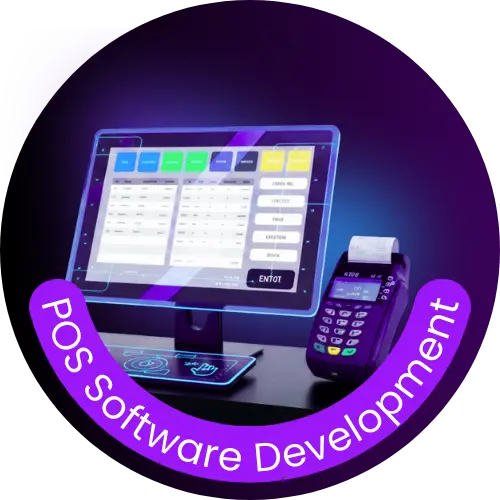
Since around 2020, POS systems have morphed far, far beyond just being a fancy cash register. Today’s point of sale systems are fully-fledged omnichannel hubs that handle sales, inventory, payment processing, customer data, and loyalty programs all in real time, across multiple locations and channels.
Your development partner is going to shape every single aspect of your project: the total cost, the time to go live, system stability during peak hours, compliance with standards like PCI DSS, and your ability to add new locations or online ordering without having to rebuild from scratch. A partner with deep experience in your industry (like hospitality or retail) will anticipate problems – like handling cash tips, split bills, seasonal inventory fluctuations, or multi location management before they even become a problem.
Put this scenario into perspective: A small chain of retail stores decides to expand from one to five locations between 2024 and 2026, and they choose a vendor primarily based on being cheap and having a generic “custom software” portfolio. Six months later, the POS system crashes during weekend peaks, inventory counts are all over the place across stores, and reconciling daily sales requires hours of manual spreadsheet work. The “savings” on development costs are just wiped out by lost sales, overtime labour, and having to do an emergency rebuild.
When evaluating pos software development companies, keep these dimensions in mind:
The rest of this article is a step-by-step guide to selecting the right pos development partner—not just a generic checklist, but a practical framework you can act on this week.
Before you even talk to a single vendor, document your own goals, workflows, and constraints. This will save you weeks of back-and-forth and help you evaluate proposals objectively rather than being swayed by fancy demos.
Start by mapping out what your pos system needs to do daily:
These “invisible” requirements often determine whether staff actually use the system or work around it:
List the devices your pos hardware setup requires:
Clarify whether your system must work online only, offline only, or in hybrid mode critical for locations with unreliable internet or for mobile pos setups at pop-up events.
Your business type dictates must-have functionality:
| Industry | Key Features |
| Restaurants | Table management, menu management, split checks, tip handling, kitchen display integration |
| Fashion Retail | Size/color variants, seasonal inventory, customer behavior tracking |
| Electronics | Serialized inventory, warranty tracking, detailed sales reports per SKU |
| Service Businesses | Appointment booking integration, service-based billing, time-tracking |
| Multi-location Retail | Centralized catalogs, multi location support, consolidated reporting |
A mobile pos solution matters if you run food trucks, pop-up shops, or offer curbside pickup.
Be honest about your limits:
Document all of this before your first vendor call. You’ll evaluate proposals against your written requirements, not your memory of what seemed important at the time.
Doing your homework before even looking at vendors will save you from the common mistake of going with the first Google result or a friend’s casual recommendation. Have a look around, then narrow down your search strategically.
Use multiple sources to build your initial list:
When you’re looking for vendors, look for those that explicitly list POS, retail systems, or hospitality software as a core service not just “custom software development”. A generalist shop may struggle with the complexities of payment processing, tip calculations, or offline mode requirements.
When scanning online reviews, apply a critical eye:
Aim to identify 3–7 companies that meet your initial criteria:
Create a simple comparison document capturing:
| Company | Founded | Core Tech Stack | Team Size | Pricing Model | Notable POS Projects | Support Options |
| Vendor A | 2015 | Java, React, AWS | 45 | Hourly | Restaurant chain (2023) | 24/7 SLA |
| Vendor B | 2019 | .NET, Azure | 20 | Fixed-price | Fashion retail (2022) | Business hours |
This structured approach makes later comparisons straightforward rather than relying on scattered notes and fuzzy impressions.
POS workflows are a world apart between a quick-service restaurant, a multi-store fashion retailer, a grocery chain, and a service-based business like a salon. Having domain expertise will speed up implementation and reduce costly misunderstandings.
When reviewing vendor portfolios, look for explicit mentions of your industry:
Generic screenshots of “retail dashboards” without context tell you little. Ask for 1–2 case studies per vendor showing measurable outcomes:
Your pos company must understand the tax logic and compliance requirements for your location:
Ask directly: “How have you handled regional tax configurations in past projects?”
Prepare pointed questions that reveal depth of experience:
Vendors who answer with specifics naming actual challenges, solutions, and trade-offs demonstrate genuine experience. Those who respond with marketing generalities likely lack the depth you need.
Some pos vendors try to sell you a generic solution and expect you to fit your business into their template. Others will sit down with you and work out a system that is custom-fit for your business, its size and where it’s going. The custom job will cost a bit more upfront, but in the long run it will save you a ton of hassle and give you a much better customer experience.
These days a pos system needs to be a cloud-based solution, API-driven and able to work on any web browser, or tablet or even phone. The tech stack is what determines how smooth or bumpy the ride is going to be.
Ask vendors about their experience with:
| Category | Technologies |
| Cloud Platforms | AWS, Microsoft Azure, Google Cloud Platform |
| Web Frameworks | React, Angular, Vue.js |
| Mobile Development | Flutter, React Native, native iOS/Android |
| Backend Languages | Node.js, .NET, Java, Python |
| Databases | PostgreSQL, MySQL, MongoDB, cloud-native options |
A well-architected cloud-based pos system typically includes:
This architecture supports seamless integration with other business tools and scales naturally as your business grows.
Payment security isn’t optional. Evaluate vendors on:
Your pos solution must connect with existing business tools:
Ask: “What’s the most complex integration you’ve completed in the last two years?” The answer reveals their actual capability versus aspirational marketing.
Well-designed systems use modular architecture that makes future changes manageable:
Ask vendors what they’ve done recently: self-checkout kiosks, QR-code ordering, inventory apps, AI demand forecasts or digital receipts. Their answer will give you a pretty good idea if they’re on top of industry trends or stuck in the old ways.

Even highly skilled developers can fail if they lack structured project management and transparent communication. How a vendor works matters as much as what they build.
Look for vendors using Agile or Scrum methodologies with:
Avoid vendors who propose a “big bang” approach where you see nothing for three months, then receive a complete system that may or may not match your needs.
Professional vendors use established tools for transparency:
| Purpose | Common Tools |
| Task tracking | Jira, Trello, Asana, ClickUp |
| Communication | Slack, Microsoft Teams, email |
| Video calls | Zoom, Google Meet, Microsoft Teams |
| Documentation | Confluence, Notion, Google Docs |
| Code management | GitHub, GitLab, Bitbucket |
Ask which tools they use and whether you’ll have access to project boards and progress updates.
Insist on a single point of contact responsible for:
Without a dedicated project manager, you’ll spend hours chasing updates across multiple developers.
Clarify expectations upfront:
Cultural Fit
Evaluate softer factors during initial calls:
Questions to ask:
A new pos system cannot operate as a standalone island. It must fit into your existing ecosystem of payments, accounting, inventory, loyalty, and e-commerce tools or create frustrating operational silos.
Evaluate vendors on their ability to connect systems:
Ask for specific examples: “Describe a complex integration you completed recently what systems, what challenges, what outcome?”
Your pos hardware investment should work with your software choice:
Confirm that hardware testing is part of the project plan, not an afterthought.
A scalable pos system handles growth without performance degradation:
Ask: “If we need to add three new locations next year, what’s involved?”
For businesses with multiple outlets, verify the system supports:
Moving from an old system involves transferring historical data:
Ensure the vendor has a documented migration process with validation steps and a trial run before go-live. Losing years of customer data or sales history during migration is a preventable disaster.
The cheapest quote often leads to hidden costs, delays, or the need for a rebuild—which increases total ownership cost dramatically. Focus on value, not just the lowest number.
| Model | Description | Best For |
| Hourly rates | Pay for time spent; $25–$60/hr offshore/nearshore, $75–$150+/hr onshore | Evolving scope, ongoing development |
| Fixed-price | Set fee for defined scope | Well-documented requirements, limited changes |
| Monthly retainer | Recurring fee for ongoing work | Continuous development and support |
| Hybrid | Fixed price for core build, hourly for changes | Balanced risk sharing |
Be skeptical of extremely low rates. A $25/hr team that takes twice as long and requires extensive rework costs more than a $60/hr team that delivers on time with clean code.
Custom pos software projects vary widely based on complexity:
| Complexity | Typical Range | Includes |
| Single-store, basic | $15,000–$40,000 | Core POS, basic inventory, standard integrations |
| Multi-store, moderate | $40,000–$100,000 | Multi location support, loyalty, multiple integrations |
| Enterprise, complex | $100,000–$250,000+ | Advanced analytics, custom workflows, extensive integrations |
These ranges cover development only not hardware, payment processing fees, or ongoing costs.
Look beyond the initial build to understand full costs over 3–5 years:
Watch for hidden fees: charges for additional users, fees for processing changes, or surprise costs for “premium” support levels.
Request itemized proposals that break down:
Clarify the change-request process: How are scope changes priced? What’s the approval workflow?
Price alone doesn’t indicate value. Evaluate:
A vendor at the higher end of your budget who delivers a scalable system with excellent documentation may cost less over five years than a bargain provider requiring constant fixes.
Past performance especially from 2020 onward, during rapid POS digitization is the best predictor of future delivery quality. Due diligence protects your investment.
When examining case studies and portfolios, look for:
Request 2–3 client references and ask specific questions:
Listen for consistency between the vendor’s claims and what clients actually experienced.
Robust long-term support should include:
| Element | What to Look For |
| SLAs | Defined response and resolution times for different issue severities |
| Availability | Business hours vs. 24/7; weekend/holiday coverage |
| Incident process | Clear steps for reporting issues and tracking resolution |
| Escalation paths | Access to senior engineers for critical problems |
| Proactive monitoring | Vendor watches system health, not just reactive to your reports |
Technology evolves. Your vendor should provide:
Ask how the company handles handover:
A vendor who hoards knowledge creates dependency. A good partner builds your capability while remaining available for complex issues.
A mature, experienced partner may quote higher rates but typically reduces the hidden costs that derail budgets: rework, downtime, lost sales, and employee frustration.
When businesses choose primarily on price, they often encounter:
Experienced partners keep projects on track through:
Consider this example: A retail business selects a vendor offering rates 40% below competitors. Initial development takes three months longer than planned. After launch, the system crashes during the first weekend rush. The business spends $15,000 on emergency fixes and loses an estimated $25,000 in sales. A second development cycle adds another $30,000. Total cost exceeds what a reliable vendor would have charged—and the business lost six months of stable operations.
A well-chosen vendor reduces costs over time:
Investing in the right pos partner pays dividends well beyond the initial project.
Here’s a practical checklist summarizing the approach into a sequence you can follow over the coming weeks.
A structured process typically takes 8–12 weeks from starting research to signing a contract. Plan accordingly if you have a fixed launch target.
Include both technical and business stakeholders in the final decision:
A pos solution that works for one group but frustrates another will create ongoing friction.
Choosing the right pos software development partner is a strategic decision that can make or break your business for years to come. Consider Rlogical. This isn’t just about buying some commodity software it’s about partnering with someone who can help you process sales, manage inventory, understand customer behaviour and grow your business.
The most important factors to prioritize:
Treat vendor selection as an investment in your business’s infrastructure, not just a line-item expense. The right pos system supports new channels (online ordering, mobile pos, self-service kiosks), additional locations, and evolving customer expectations without requiring a full rebuild every few years. Learn more about hiring dedicated POS developers: https://www.rlogical.com/hire-dedicated-developers/
Start today: Document your current pain points and must-have features. Identify 3–5 pos software development companies that match your criteria. Schedule discovery calls for next week. The sooner you begin a structured selection process, the sooner you’ll have a reliable system supporting your business performance and future growth.
It really all depends on how complex you’re looking to make the system. If you want something simple and straightforward, with just a few basic features, it might only take 4-8 weeks of development time to get up and running. If you have multiple locations, lots of integrations (e.g. with e-commerce platforms, accounting software, CRM systems and several payment gateways), then it can take 12-20 weeks. Don’t forget to add in a bit of extra time for gathering requirements, finding the right hardware, and training staff (we’re talking maybe 2-4 weeks for requirements gathering, 1-3 weeks to get the right hardware sorted, and 1-2 weeks to make sure your staff are up to speed) that’ll all add up.
It’s a tough one, but both options have their good points. Building something from scratch gives you total control over how things are done, so if you have a business that needs something that a generic system can’t offer, then custom is probably the way to go. However, it costs a lot and takes a long time. Pre-made platforms (like Square or Toast) are a lot cheaper and faster to get up and running with, but you might find that you can’t customise them quite as much as you’d like, and that might cause issues down the line. A lot of businesses find that a compromise is the way to go, start with a system that has a bit of flexibility and then add in custom bits that really matter to you. A good POS developer should be able to help you figure out which approach is right for you.
Even business owners with just a few staff might find it helpful to have a designated person who can act as the main contact with the developer and make decisions and give feedback without needing to go through a whole chain of command. For more complicated projects, it might be helpful to have people involved from different areas of the business – say, from operations to make sure the day-to-day stuff will work, from finance to make sure the reporting and accounting integrations are sorted, and from IT to make sure the system is secure and works with your existing infrastructure. Just make sure you can get decisions made quickly and that you don’t need to wait too long for feedback, or the project might stall.
There are a few things you can do to reduce the risk of a system meltdown. First, you could do a phased rollout and start with a pilot in one location or with just a few transactions to test things out before rolling it out more widely. Second, make sure you have done some thorough testing, using real-life scenarios (like handling returns or dealing with split bills) to make sure everything works as it should. Third, make sure you have a clear plan in place in case something does go wrong – a rollback plan that lets you quickly switch back to the old system if you need to. Fourth, train all your staff on the new system before you go live, rather than just during the first busy shift. Fifth, make sure your developer has a clear SLA for incident response – you need to know you can get help quickly if something goes wrong in the first few weeks after launch.
Payment security is non-negotiable for any business handling credit card transactions or storing customer data. Key topics to address:
Ask for documentation of their security practices, not just verbal assurances. A credible vendor like Rlogical will be prepared to answer these questions in detail you can contact them here: https://www.rlogical.com/contact/
Rahul Panchal is a visionary technology entrepreneur and the Founder & Managing Director of Rlogical Techsoft Pvt. Ltd. Passionate about the power of Artificial Intelligence, he focuses on helping businesses transform through AI-driven solutions, intelligent automation, and data-centric digital ecosystems. Alongside AI, his expertise spans scalable web and mobile platforms, Cloud, IoT, and modern enterprise technologies enabling organizations to innovate faster, optimize operations, and build future-ready digital products with real business impact.
Global insights on technology trends, best practices, and digital transformation strategies.
A proven track record of high-impact deliveries across industries and technologies
Share with us. We'll assess its feasibility, suggest the right tech stack, and share a clear cost & timeline.
Years of Experience
Projects
Countries
Engineers
Verified Client Reviews
Industry Served