

Share




Published on 26 February, 2016
| Last Updated on 04 May, 2026
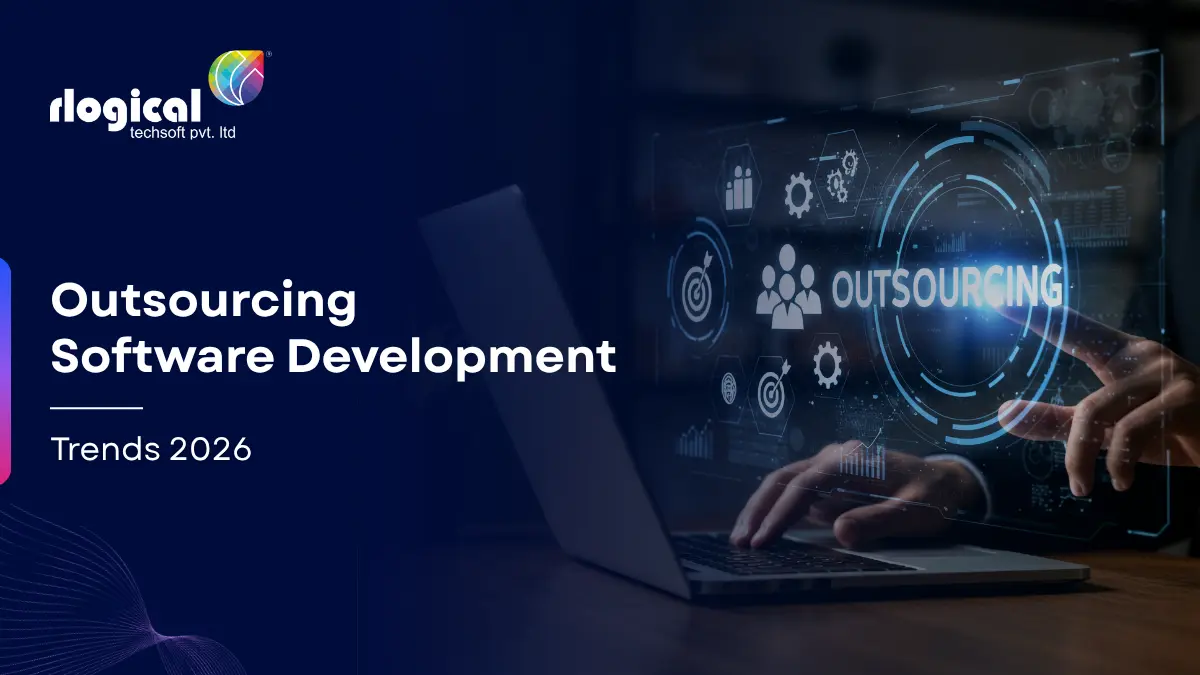
Ten years ago, outsourcing software was mostly about saving money. Sign a fixed-price contract, ship the work to India or a few Eastern European hubs, and hope the timezone gap did not slow things down too much. That world is gone.
By 2026, outsourcing has become a strategic lever for AI capability, security expertise, faster product launches, and access to specialists you simply cannot hire locally. The shift has been quiet but huge. If you are renewing a vendor contract, picking your first offshore partner, or rethinking how your engineering team scales, this guide walks you through what has actually changed and where the smart money is going.
In 2016, outsourcing software development was driven mainly by cost. Big firms like HP, IBM, ATOS, and Accenture were renewing massive multi-year contracts. Smaller businesses were just beginning to test offshore vendors, mostly in India and a handful of Eastern European countries.
The themes that defined that year:
Speed mattered, but it was measured in months. Remote work was a perk, not a model. Artificial intelligence sat in research papers and a few experimental products, not in client contracts.
Fast forward ten years and the outsourcing world is barely recognizable. Different research firms put the global IT outsourcing market anywhere between 400 billion and 800 billion US dollars in 2026 depending on what they include, but every credible source agrees on one thing: it is still growing, and software development is the single largest category inside it.
What defines the modern landscape:
Cost still matters. Deloitte data shows companies typically save 20 to 30 percent through outsourcing, and 80 percent of executives plan to maintain or grow their outsourcing investment. But savings are no longer the only reason to do it. Today, businesses outsource to move faster, find scarce talent, and stay ahead of the technology curve.
Here is how the picture has shifted across the parts of software development outsourcing that matter most.
2016: Cost reduction was the headline reason. Most contracts existed to lower expenses or renew big budgets at lower rates.
2026: Strategy comes first. Companies outsource to ship faster, plug skill gaps in AI and cybersecurity, and scale teams on demand. Cost still counts, but it has dropped from the only reason to one of several.
2016: Fixed-price work dominated. The shift toward agile and outcome-based contracts had only just started.
2026: Outcome-based, managed-service, and dedicated team models lead. Fixed-price work is now mostly used for small, well-scoped projects.
2016: India and a few Eastern European countries handled most offshore work. Latin America was an emerging option.
2026: The map is far wider. India still leads, but Vietnam, the Philippines, Poland, Ukraine, Romania, Mexico, Colombia, and Portugal are all major destinations. Latin American nearshoring has grown sharply for US clients who want timezone overlap.
2016: Office-based vendor teams were the norm. Travel and on-site visits were standard.
2026: Remote-first and distributed teams run most engagements. Mercer’s well-cited employer survey found that 94 percent of companies reported productivity stayed the same or rose with remote work, and the model has now stuck. Hybrid setups blend in-house staff, offshore teams, and freelance specialists into a single workflow.
2016: Web apps, mobile development, basic cloud migration, and enterprise software maintenance.
2026: AI engineering, generative AI integration, blockchain, IoT, cybersecurity, cloud-native architecture, DevSecOps, data engineering, and extended reality. The stack has multiplied and specialized.
2016: Quarterly releases were common. Agile was new for many vendors.
2026: Continuous deployment is the norm. Many teams ship multiple times a week, with AI-assisted coding tools cutting routine development time.
2016: Security was usually a checkbox at the end of the contract.
2026: Cybersecurity outsourcing is a category of its own, driven by GDPR, HIPAA, SOC 2, and a wave of regional data laws. Vendors without strong security credentials rarely make the shortlist.
2016: AI was experimental. Few clients asked for it, and few vendors could deliver it.
2026: AI is everywhere. Vendors use it for code generation, testing, and project management. Per Deloitte, 83 percent of surveyed executives now leverage AI in their outsourced services, and a growing share of new contracts emphasize AI-enabled service delivery.
2016: Pricing was opaque, often locked in for years through master service agreements.
2026: Clients expect transparent, flexible pricing. Subscription-style retainers, output-based pricing, and pay-as-you-scale models have become common.
2016: Relationships were transactional. The client gave specs, the vendor delivered.
2026: Relationships look more like partnerships. Outsourcing partners help shape the product roadmap, contribute to architecture decisions, and act as long-term extensions of the in-house team.
Here are the trends shaping outsourcing right now and into the next few years.
AI is no longer optional. From intelligent chatbots and predictive analytics to autonomous decision systems, businesses are racing to add AI to their products. Vendors with proven AI experience are in heavy demand because building an in-house AI team is slow and expensive. Look for partners with strong case studies, certified specialists, and a clear approach to data quality, privacy, and testing.
The global cloud computing market is expected to roughly double by 2030. Most new software is now built cloud-native from day one, with microservices, containers, serverless functions, and managed databases. Outsourcing partners are expected to know AWS, Azure, and Google Cloud well, and to handle migration, modernization, and ongoing optimization.
With cyberattacks growing in frequency and sophistication, more businesses are outsourcing security to specialists. This includes penetration testing, threat detection, secure code review, identity management, and 24/7 security operations centers. For regulated industries like finance and healthcare, outsourcing security is often safer than building it in-house.
Pure offshore is giving way to a mix of nearshoring (similar timezones) and multi-sourcing (different vendors for different specialties). US companies are hiring across Latin America. European companies are looking to Eastern Europe and North Africa. The goal is to balance cost, timezone overlap, language fit, and geopolitical stability.
Instead of hiring vendors per project, more businesses are bringing on dedicated development teams that work exclusively on their product for months or years. This model creates deeper product knowledge, better continuity, and fewer handoffs. It works particularly well for startups and scaling tech companies.
Generalist vendors are losing ground to specialists. Whether you need a blockchain engineer, an MLOps lead, a Flutter expert, or a GenAI prompt engineer, clients now pay more for proven niche skill rather than hiring a generalist who learns on the job.
Clients want to pay for results, not hours. Outcome-based contracts tie payment to specific business goals such as a working MVP, a performance benchmark, or a successful launch. This pushes vendors to think like partners rather than contractors.
Especially in North America and Europe, ESG criteria now influence which vendor wins the contract. Buyers are asking about energy use, ethical hiring, diversity, and data center sustainability. Green outsourcing is no longer a buzzword.
Global mobile app revenues continue to climb every year. Cross-platform frameworks like Flutter, React Native, and Kotlin Multiplatform let outsourcing partners deliver iOS, Android, and web apps from a single codebase, cutting both cost and timeline.
VR, AR, and mixed reality are pushing into healthcare, retail, education, and training. Few companies have in-house XR talent, so outsourcing has become the natural fit for early adopters.
Despite all the changes, a few things have not budged:
Picking a vendor today takes more thought than it did a decade ago. Useful questions to ask:
If you want a partner that ticks these boxes, Rlogical Techsoft has spent over a decade helping startups and enterprises ship modern software with the right blend of AI expertise, cloud-native architecture, and dedicated teams.
The shift from 2016 to 2026 is not just about new tools or buzzwords. It is a real change in why and how businesses outsource. Cost savings opened the door a decade ago. Today, outsourcing is a strategic lever for speed, innovation, security, and global talent.
If your outsourcing playbook still looks like it did in 2016, it is time for a refresh. The vendors winning right now are the ones treating clients like partners, building with AI from day one, and delivering measurable business outcomes, not just lines of code.
Ready to bring your software vision to life with a partner built for 2026? Get in touch with our team to talk through your project, your goals, and the outsourcing model that fits best.
A: Yes. Outsourcing now offers more value than ever, with average savings of 20 to 30 percent plus access to specialized AI, cloud, and security skills that are hard to hire locally.
A: India leads overall. Vietnam, the Philippines, Poland, Ukraine, Romania, Mexico, Colombia, and Portugal are all strong choices depending on your timezone, budget, and required skills.
A: AI is speeding up coding, testing, and project management while also creating heavy demand for AI-specialized vendors. Per Deloitte, 83 percent of surveyed executives already use AI as part of their outsourced services.
A: Offshore means hiring teams in distant countries (usually for the lowest cost). Nearshore means hiring in countries with a close timezone. Onshore means hiring within your own country, usually at the highest cost but with the fastest collaboration.
A: Sign solid NDAs and master service agreements, choose vendors with SOC 2 or ISO 27001 certification, use secure code repositories, and include clear data residency and compliance clauses tailored to your industry.
Rahul Panchal is a visionary technology entrepreneur and the Founder & Managing Director of Rlogical Techsoft Pvt. Ltd. Passionate about the power of Artificial Intelligence, he focuses on helping businesses transform through AI-driven solutions, intelligent automation, and data-centric digital ecosystems. Alongside AI, his expertise spans scalable web and mobile platforms, Cloud, IoT, and modern enterprise technologies enabling organizations to innovate faster, optimize operations, and build future-ready digital products with real business impact.
Global insights on technology trends, best practices, and digital transformation strategies.
A proven track record of high-impact deliveries across industries and technologies
Share with us. We'll assess its feasibility, suggest the right tech stack, and share a clear cost & timeline.
Years of Experience
Projects
Countries
Engineers
Verified Client Reviews
Industry Served